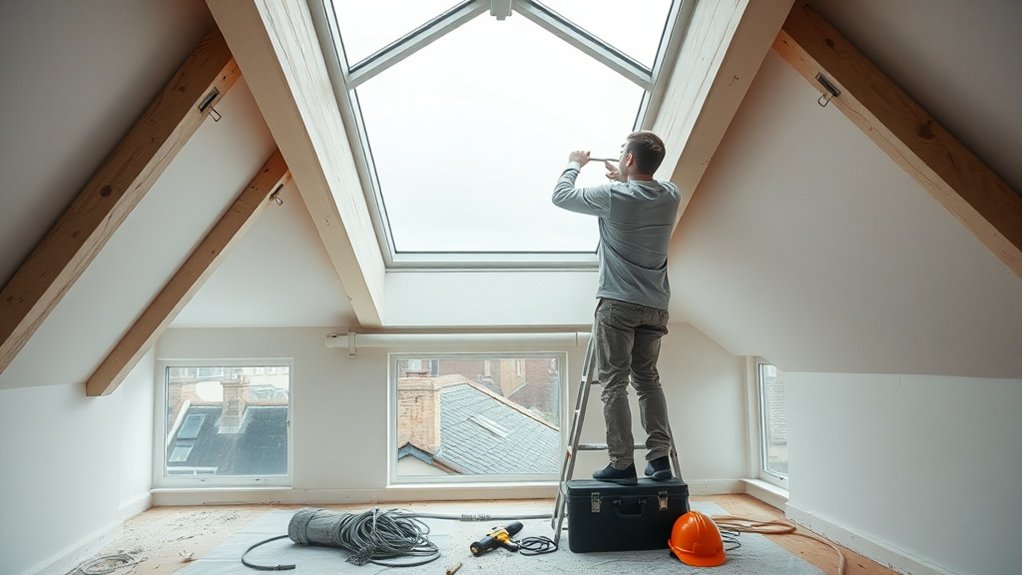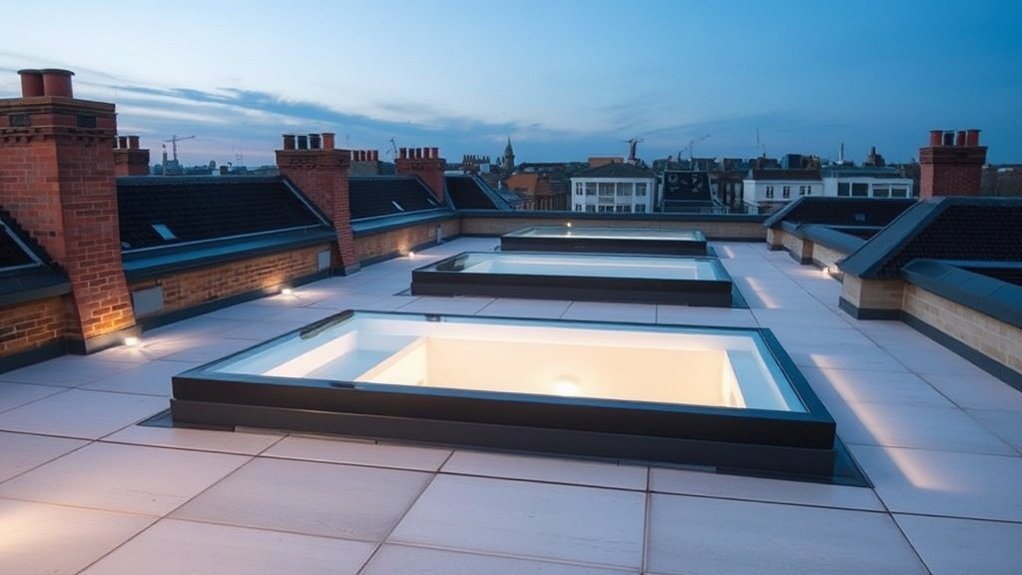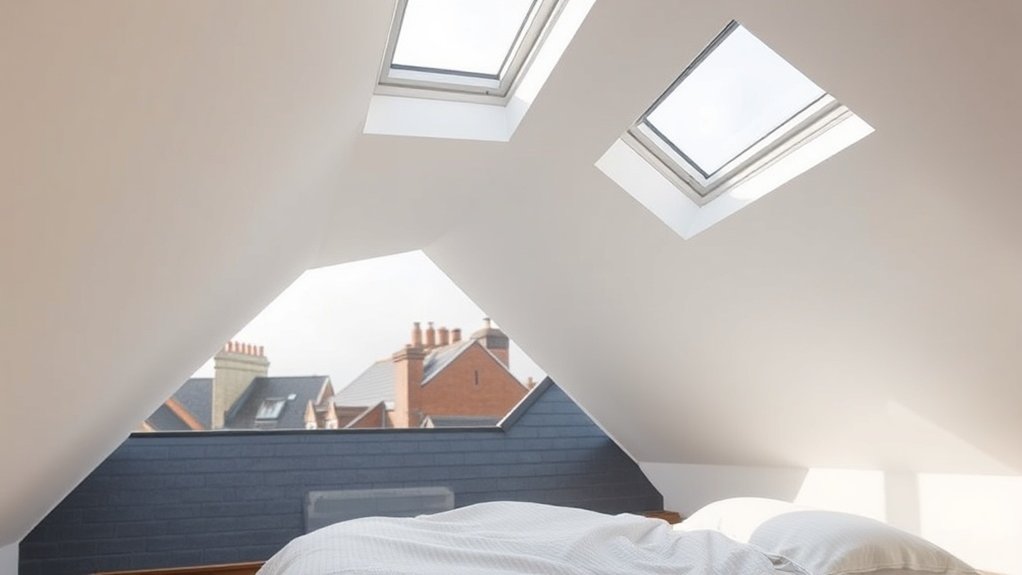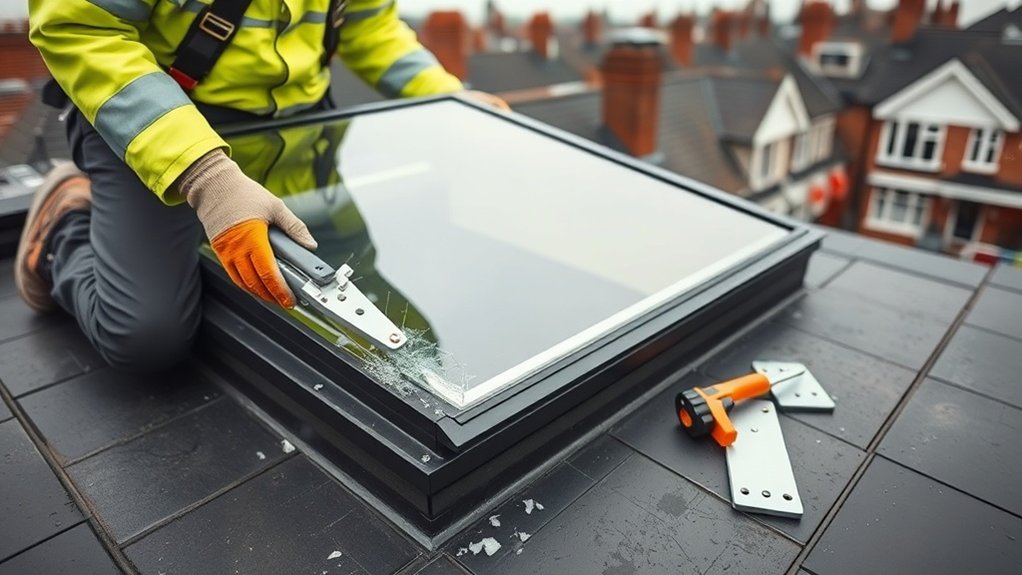
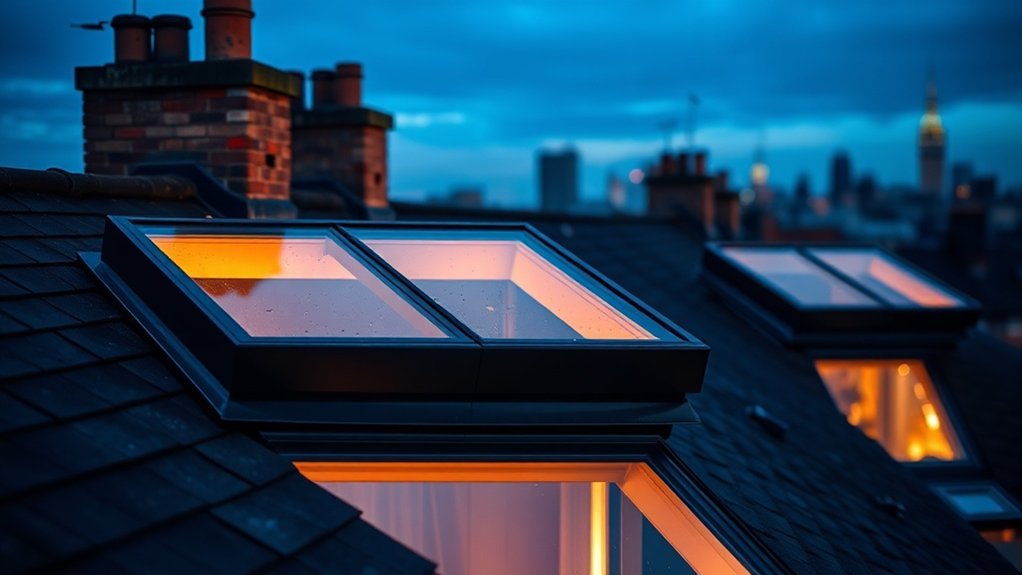
Skylights bring daylight into the middle of a Vauxhall home, where windows in the walls cannot reach. We supply and fit flat rooflights, pitched roof windows, roof lanterns and walk-on glass across Vauxhall, on terraces, semis, flats and commercial roofs. Each type needs its own structural trimming, upstand and vapour control detail, and each has a different glazing specification to get right. This page explains which skylight suits which roof, how glazing and ventilation choices affect comfort, what planning and Building Regulations require, and what you can expect to pay, so you can avoid the leaks, condensation and draughts that follow a poor installation.
Key insights
- A well-placed skylight lights a deep-plan Vauxhall room from above, making it feel taller and reducing daytime use of artificial lighting.
- Flat rooflights, pitched roof windows, lanterns and walk-on glass each suit particular roof build-ups and uses.
- Structure, overlooking, conservation area rules and Part L all need checking before the roof is cut.
- Low-E coatings, warm-edge spacers, insulated upstands and optional triple glazing control heat loss and summer gain.
- Opening units with rain sensors, blinds and shading manage condensation, glare and privacy in closely built Vauxhall streets.
Benefits Of Adding Skylights To Vauxhall, SW8 Homes
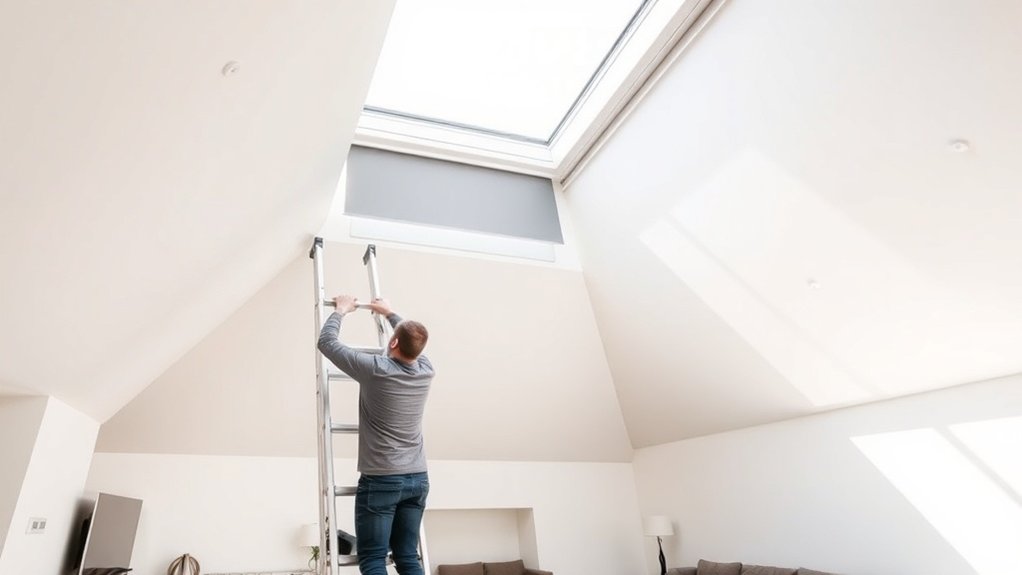
A skylight in a Vauxhall home does three things at once: it lifts daylight levels in rooms that windows cannot serve, it makes a low or narrow room feel bigger, and, if specified properly, it improves the thermal performance of the roof around it. Hallways, landings, bathrooms and the middle of a through-lounge all gain light that would otherwise need a lamp on at midday, and overhead light is more even than light from a side window.
In winter a rooflight collects useful solar warmth, while modern glazing limits both heat loss at night and overheating in summer. Structurally, a unit can usually be framed between existing rafters or set into a trimmed opening without disturbing the roof's drainage. A light shaft framed down to the ceiling gives a view of sky and rooftops, and the quality of overhead light shows off finishes, timber and tiling far better than downlighters do.
How To Choose The Right Skylight For Your Vauxhall Home
Choosing a skylight for your Vauxhall home starts with the roof itself rather than the catalogue. We record rafter spacing, pitch, insulation depth and any steel beams, because those decide how large an opening is possible, how tall the upstand must be and how the unit will meet the waterproofing layer.
The next check is sun and shade. Neighbouring buildings, trees and the orientation of the roof determine how much solar gain you will get, which in turn sets the g-value, light transmittance and whether external shading is worth adding. Inside, line the unit up with the room's geometry, keep the ceiling plane tidy and choose slim frames so the opening reads as a clean rectangle of sky.
Finally, think about looking after it: an opening mechanism you can reach, a self-cleaning outer pane and internal reveals that cope with the condensation and grime typical of Vauxhall, SW8 roofs.
Common Types Of Skylights Vauxhall Homeowners Use
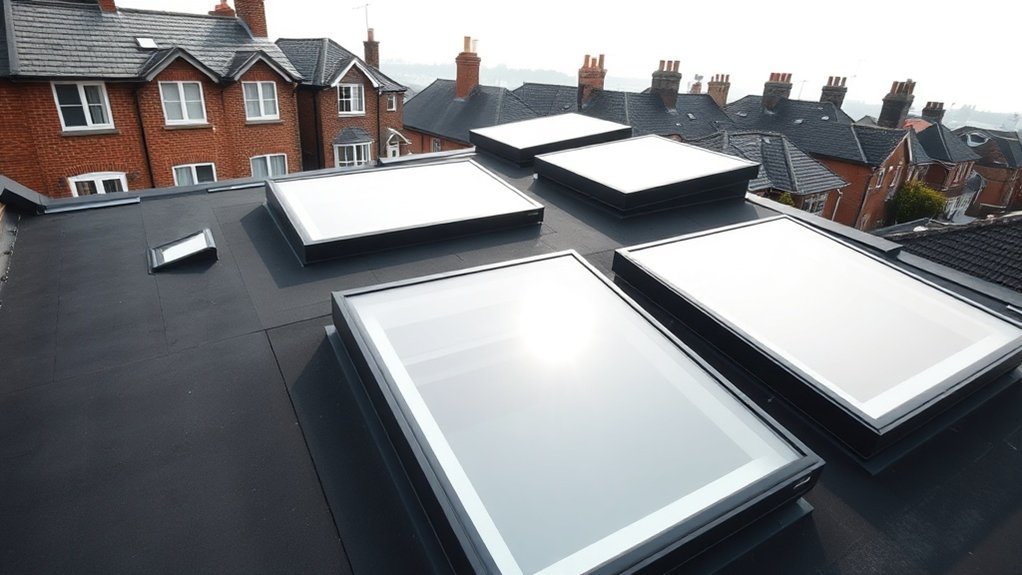
Across Vauxhall housing stock three skylight formats account for nearly every job: flat rooflights, pitched roof windows and modular roof lanterns. Flat rooflights sit almost flush with a warm flat roof, give very good U-values and spread soft, even light into kitchens, corridors and deep rear extensions.
Pitched roof windows fit between rafters on a sloping roof, keep the existing roofline and open for ventilation. They can be ordered with triple glazing, a laminated inner pane and acoustic upgrades, which helps on busy roads and under flight paths.
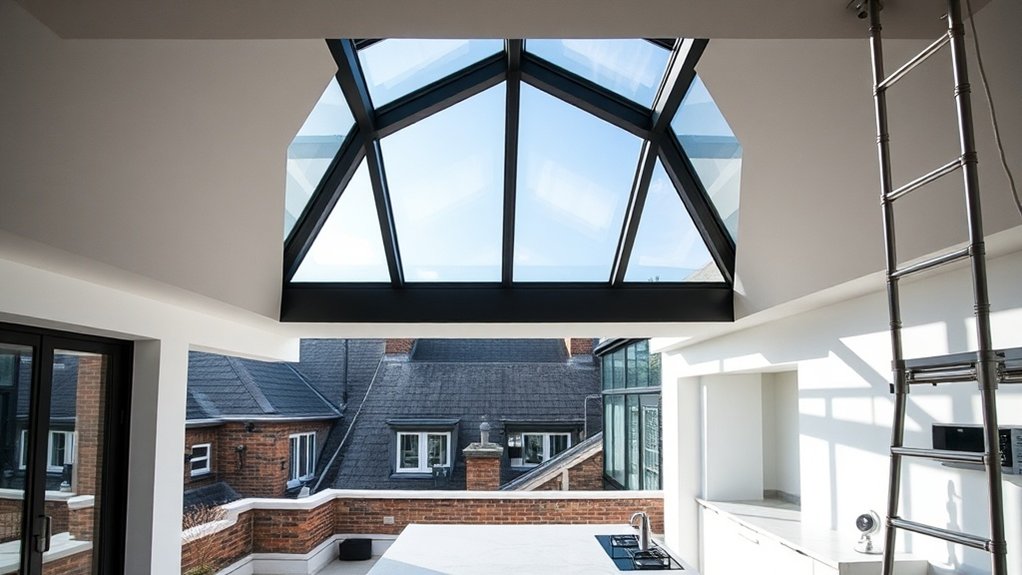
Roof lanterns are raised, thermally broken frames over a larger opening, creating a tall, atrium-like volume. They need careful upstand, drainage and vapour control detailing, and regular cleaning, so plan access for a window cleaner or a reach pole before you commit to one.
Skylights For Vauxhall Terraces And Loft Conversions
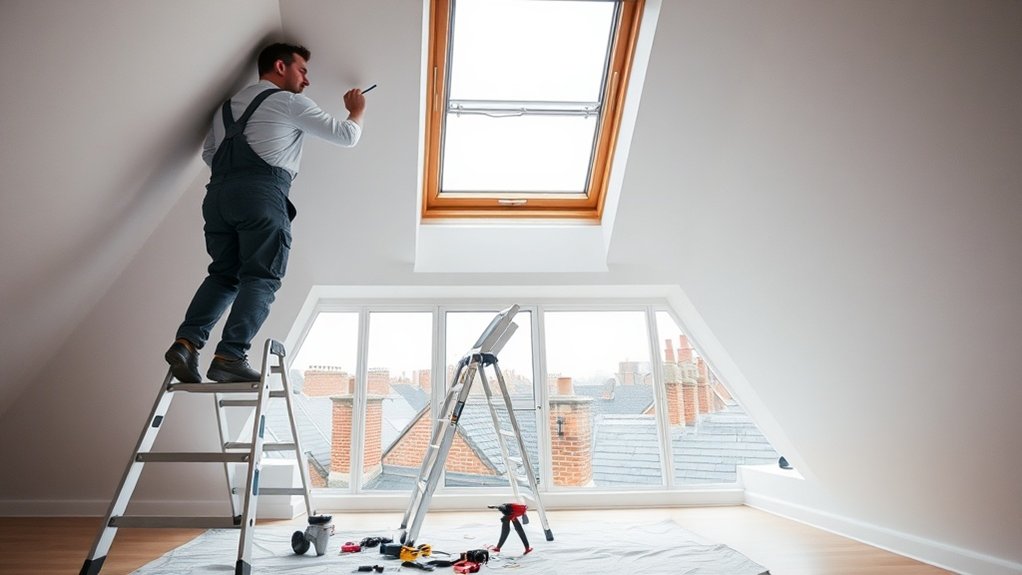
Loft conversions and roof terraces on Vauxhall terraced houses come with tight roof geometry, party-wall boundaries and a need to get as much daylight as possible into a shallow plan. Rooflights, walk-on units or a small lantern have to be positioned to push light deep into the floor while keeping the insulation continuous and the load paths intact. On a terrace the design also has to deal with fall protection, waterproofing junctions and framing that ties into the existing joists and steelwork.
Maximising Light In Lofts
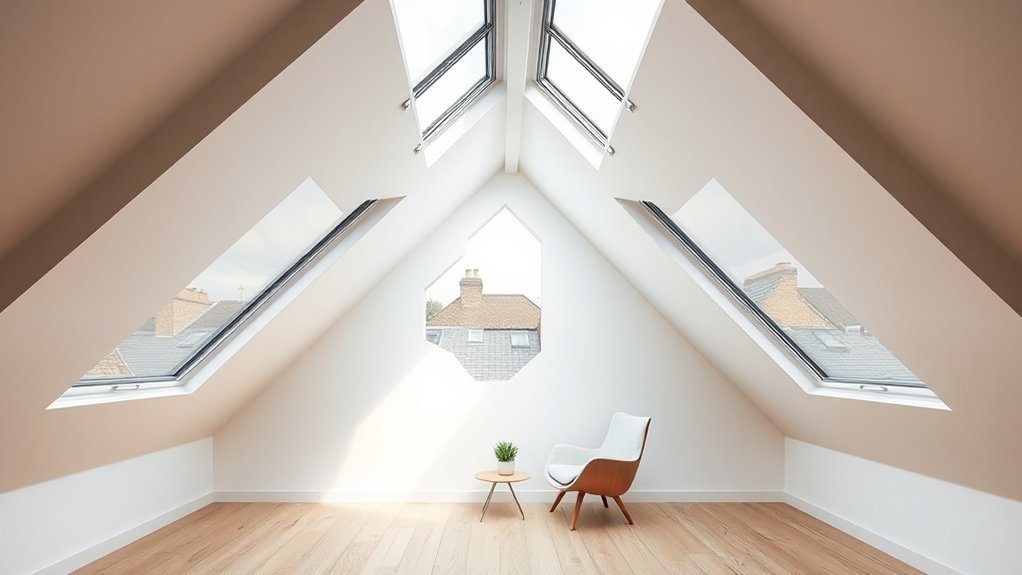
Terraced houses in Vauxhall, SW8 have narrow lofts with a party wall on each side, so the roof slope is the only real source of daylight. Treat the skylights as the main windows of the room rather than extras, and put them on the sun-facing pitch where they will light the longest run of the space.
Larger glazed areas are possible by trimming between rafters with doubled headers and strengthened purlins, which we size with a structural engineer where needed. Keeping the glass close to the roof plane reduces deep reveals and shadow lines. A pair of high rooflights combined with a dormer window or gable glazing lower down gives light from two levels, so lux levels stay steady from morning to late afternoon.
Terrace Skylight Design Tips
Because a Vauxhall terrace is narrow and deep, skylight placement on a roof terrace needs to follow the structure, not the furniture plan. We map joist direction, chimney stacks and rainwater outlets before marking an opening, and we set the unit within a structural bay so trimming is kept to a minimum.
Low-profile, thermally broken aluminium frames with laminated solar-control glass limit heat gain while keeping the view. Walk-on or box rooflights make the terrace feel larger and connect it to a roof garden, but check the live-load rating and slip resistance of the glass first. Insulated upstands, a vapour control layer and warm-roof insulation stop condensation forming inside the build-up. Sketch the sightlines too, so neighbours' windows do not look straight down into your rooms.
Skylights For Vauxhall Extensions And Kitchens
Skylights for Vauxhall extensions and kitchens are about getting light onto worktops and the dining table, which means thinking about where the glass sits relative to the ceiling, how deep the room is and which way the roof faces. Fixed flat rooflights, lanterns and modular linear units each interact differently with joist layout, roof pitch and the steel that usually carries a rear extension. Glazing performance, thermal breaks and opening vents then decide how comfortable the room is in July and January.
Maximising Natural Kitchen Light
A dim Vauxhall kitchen or rear extension is usually fixable from above. We begin by checking which way the roof faces, how much the neighbours' walls overshadow it and how the joists or rafters run. On tight plots and in older houses, new openings can be threaded between joists with engineered trimmers or a flitch beam, keeping the structure sound.
Place rooflights above the places you actually work: the prep run, the island and the sink, so light falls on the task rather than behind you. Proportion matters; a long slim unit over the worktop often lights a kitchen better than a single square in the centre. Choose glazing with the right light transmittance and a low g-value, and splay the internal reveals outwards so more sky is visible without losing privacy or insulation.
Skylight Designs For Extensions
Side-return and rear extensions in Vauxhall, SW8 are deep, with a party wall on one side, so side windows are rarely an option and the roof carries most of the daylighting. The usual choices are flat rooflights, a roof lantern or a long linear slot along the boundary wall, each giving a different balance of view and diffused light.
Openings can be framed between existing joists, or a steel box frame can carry trimmed rafters where you want a large area of glass. Staggering two or three rooflights helps define cooking, dining and seating zones under one roof. A lightly frosted or fritted inner pane softens harsh contrast on worktops, and slim thermally broken frames keep the glass reading as crisp openings in the ceiling.
Energy Efficiency And Ventilation
In a Vauxhall kitchen extension skylights are part of the energy and ventilation strategy as much as the lighting. High-performance glazing lets in useful winter sun while keeping conductive loss and summer gain down. Low-E coatings, warm-edge spacers and an insulated kerb keep the surface temperature of the glass closer to room temperature, which reduces both heating demand and condensation.
For ventilation, an opening rooflight at high level uses the stack effect: warm, cooking-laden air rises and leaves through the vent, pulling cooler air in through doors and windows below. Rain and wind sensors, trickle vents and a well-sealed thermally broken frame give you control over that airflow, so you get fast purge ventilation after cooking without leaving the roof open to the weather.
Fixed Vs Opening Skylights In Vauxhall’s Climate
The choice between fixed and opening skylights in Vauxhall's wet, changeable climate is a choice between a sealed unit that gives the best airtightness and thermal stability, and an operable unit that adds ventilation and, in some cases, smoke venting. A fixed rooflight has fewer joints, so there is less to leak or draught, and it still delivers full views and even daylight.
Opening units carry hinges, actuators and compression gaskets, so hinge position, sash weight and wind loading on an exposed pitch all need thought. In practice we recommend opening models, either trickle-vented or electrically operated, for kitchens, bathrooms, stairwells and lofts where warm air collects and needs purging. Fixed units suit highly insulated roofs, awkward geometry and anywhere the penetration through the roof should be kept as simple as possible.
Glass And Glazing Options For Vauxhall, SW8 Skylights
Glass choice for a Vauxhall skylight comes down to three decisions: double or triple glazing, which sets thermal and acoustic performance; a low-E coating, which manages the U-value and how warm the inner pane feels under our mostly overcast skies; and solar-control glass, which limits heat gain and glare without making the room below feel dull.
Double Vs Triple Glazing
Every rooflight in Vauxhall has to cope with wind, rain and impact, but whether it is double or triple glazed decides how it performs day to day once it is in the roof. Double glazing with a good coating meets Part L for most Vauxhall refurbishments. Triple glazing suits very low-energy houses and gives a more stable temperature under the glass, which also helps houseplants in a kitchen or garden room.
The trade-off is weight and depth. Triple units are heavier and thicker, so the upstand and the joists supporting it need checking, and the extra sash weight may change how the unit opens and how it is maintained.
- Check joist span and deflection with the heavier glass in place.
- Confirm the upstand height and bearing width suit a triple unit.
- Match the opening size to the daylight you want in the room below.
- Weigh any acoustic benefit against the extra structural work.
Low-E And Solar Control
The coatings on a Vauxhall skylight set how much heat escapes in winter, how much sun comes in during summer and how comfortable the room feels underneath. We balance U-value, g-value and light transmittance for each roof rather than using one specification everywhere, and we pick finishes that sit quietly on period roofs.
A soft-coat low-E layer on the inner pane reflects room heat back inside and cuts winter losses. A solar-control coating on the outer pane filters the strongest summer sun so the room does not overheat.
The amount of solar control depends on orientation: more for south and west-facing rooflights, lighter on north-facing ones. A laminated inner pane, warm-edge spacers, argon fill and a thermally broken frame complete the unit so the whole assembly performs as the datasheet promises.
Managing Overheating, Glare And Privacy With Vauxhall, SW8 Skylights
Houses in Vauxhall sit close together and get strong sun for part of the day, so overheating, glare and overlooking are design questions to settle at the outset, not problems to fix later. We treat the skylight as a controlled opening, using glass specification, reveal depth and the colour of the shaft to manage how much light comes in and who can see what.
Shading should look like part of the roof rather than something bolted on afterwards. The options we use most are:
- External louvres or micro-louvred glass to cut high summer sun.
- A deeper shaft to reduce low-angle glare and frame the sky.
- Switchable or patterned interlayers that block overlooking without losing daylight.
- Motorised blinds on light and temperature sensors for automatic comfort and privacy.
Skylight Energy Ratings, U-Values And Heat Loss
When you compare skylights for a Vauxhall property, treat the U-value and energy rating with the same seriousness as the structural checks. These numbers describe how much heat passes through the glass, the frame and the junction with the roof, which is where winter heat loss and summer gain show up on your bills. A low U-value, good coatings and a thermally broken frame keep losses through the roof opening small.
Understanding Skylight U-Values
Skylights are bought for light and looks, but their thermal performance is summed up in a single figure, the U-value, which states how fast heat passes through the whole assembly. In a Vauxhall refurbishment you are balancing the look of the roof against energy performance, so it helps to know what drives that figure.
A lower U-value means less heat escaping through the roof. The components that set it are:
- The glazing: number of panes, cavity width, gas fill and low-E coatings.
- The frame: thermal breaks, material and the shape of the profile.
- The edges: warm-edge spacers, seal quality and any cold bridging.
- The installation: kerb insulation, airtightness and continuity with the roof's insulation layer.
All four together determine how much heat the skylight will lose.
Energy Ratings Explained
Beyond the U-value, a skylight's energy rating describes how it will perform in Vauxhall's climate once it is in your particular roof. It combines several figures: U-value, g-value for solar gain, visible light transmittance and air leakage.
These are weighed against orientation, pitch and opening size. A low U-value limits heat loss; a well-chosen g-value harvests winter sun without cooking the room in spring and autumn. Spacer bars, gas fill and the frame design then all contribute to the rating on the label.
The rating only holds if the unit is looked after, so coatings, seals and drainage channels need to stay in good order throughout its life, which is another reason to choose a unit you can reach to clean and inspect.
Minimising Heat Loss
Energy ratings matter because they tell you how much heat the roof opening will lose, and the U-value is the figure to focus on. The goal is to keep conductive, convective and radiant losses through both glass and frame low without compromising the look of a period roof.
To cut heat loss, look at the whole assembly, not just the glass:
- Choose triple glazing or high-spec double glazing with warm-edge spacers and argon or krypton fill.
- Use thermally broken aluminium or composite frames so the metal does not act as a cold bridge.
- Insulate the upstand and seal the vapour control layer around the opening.
- Add external blinds or a low-E coating to reduce heat radiated to the night sky.
Flat Roof Skylights In Vauxhall: Lanterns, Domes And Walk-On Glass
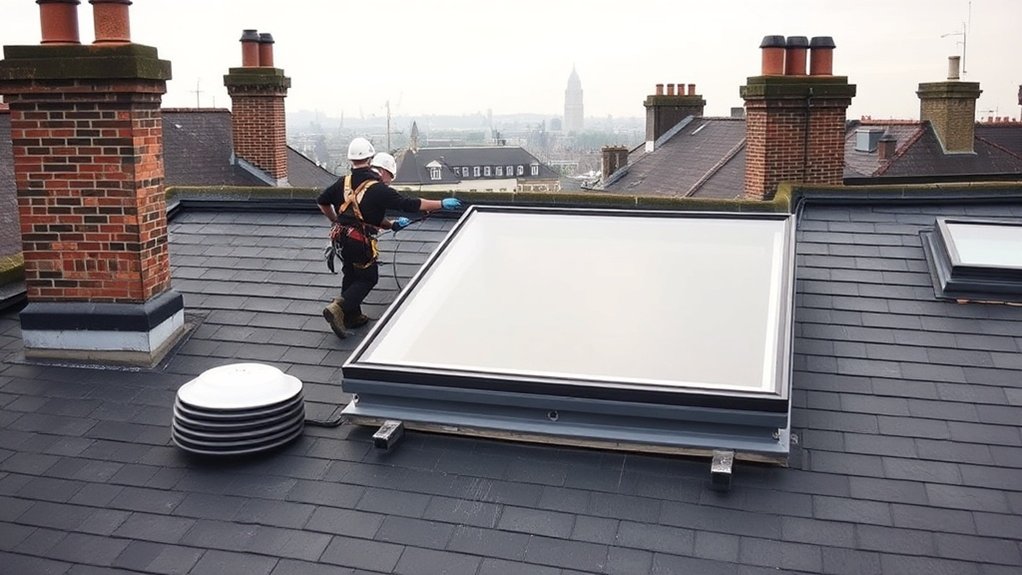
On a flat roof in Vauxhall, SW8 a skylight is an engineered opening rather than a window, and the choice narrows to lanterns, domes and walk-on glass. A lantern is a small pitched glass roof on thermally broken frames, sitting on an upstand; it gives height, a view of the sky and daylight spread deep into the room. A dome is a compact, high-transmission unit whose curve adds stiffness and sheds rain, and it suits utility areas, bathrooms and spaces beneath roof gardens.
Walk-on glass makes the roof usable as a terrace. The unit is laminated, load-rated and finished with an anti-slip surface, set in a countersunk frame with warm-edge spacers, so the room below gets daylight while the deck above stays flush and safe to walk across.
Planning Rules And Permitted Development For Vauxhall Skylights
Lanterns, domes and walk-on units only go ahead in Vauxhall if they comply with planning rules, so we design with both Part L detailing and planning limits in mind from the start. That means checking sightlines, parapet heights and overlooking, particularly on dense terraces and in conservation areas where officers pay close attention to how a roofscape looks from the street.
The checks we run before submitting anything:
- Confirm the unit stays within permitted development limits for projection above the roof slope and added roof volume.
- Assess how visible it is from the street and from neighbours' windows using sections and simple massing models.
- Check for conservation areas, listed status and Article 4 Directions that remove permitted development rights.
- Keep frame depth, upstand height and kerb detailing as low as possible so the elevation stays unobtrusive.
Building Regulations For Skylights In Vauxhall
Planning decides whether you may build; Building Regulations decide how your Vauxhall skylight must perform in terms of structure, safety and energy. The rafters, trimmers and upstand have to carry the new loads, and the opening must not weaken the roof or breach fire compartmentation between dwellings.
Glazing has to be toughened or laminated safety glass with a U-value that meets Part L and a g-value that controls solar gain. Habitable rooms need purge ventilation, which usually means an opening section or an actuator. Where a rooflight serves as an escape window, its size and the clear opening have to meet the minimum dimensions in Approved Document B.
In conservation areas we reconcile the regulations with the look of the roof by using flush, low-profile frames and colour-matched flashings that keep the original roof geometry intact.
Costs Of Skylights In Vauxhall, SW8 And What Affects Price
Meeting Building Regulations in Vauxhall has a direct bearing on cost, because structural strengthening, fire-safe detailing and thermal performance each add their own line to the quote. The price covers more than glass: it pays for trimming and steel where needed, precise flashings and the insulation that keeps the roof envelope continuous.
The main factors that move the price are:
- Glazing specification: triple glazing, solar control and low-E coatings raise the unit price but lower running costs.
- Opening mechanism: electric actuators, rain sensors and smart controls add hardware and electrical work.
- Roof configuration: steel trimming, tall upstands and weatherproofing on flat or steeply pitched roofs change labour time.
- Lifecycle: ease of maintenance and the length of the manufacturer's warranty affect the whole-life cost.
Choosing Reliable Skylight Installers In Vauxhall
Appointing skylight installers in Vauxhall means trusting someone to cut a hole in a roof that is keeping the weather out, so their competence decides whether the loads, waterproofing and insulation still work afterwards. You want a team that understands roof build-ups, vapour control layers and cold bridging, not only glazing.
Ask how they tie the upstand into the membrane, insulation and drainage falls, and ask for section drawings rather than brochure photographs. Check that the systems they fit have replaceable gaskets and accessible components so the unit can be maintained and upgraded later.
Judge their eye for the finished result in three ways: the quality of daylight inside, how the opening looks from below, and how it sits in the roofscape when seen from neighbouring buildings, which matters in dense parts of Vauxhall where planners and neighbours both take notice.
Skylight Installation In Vauxhall, SW8: Timelines And Disruption
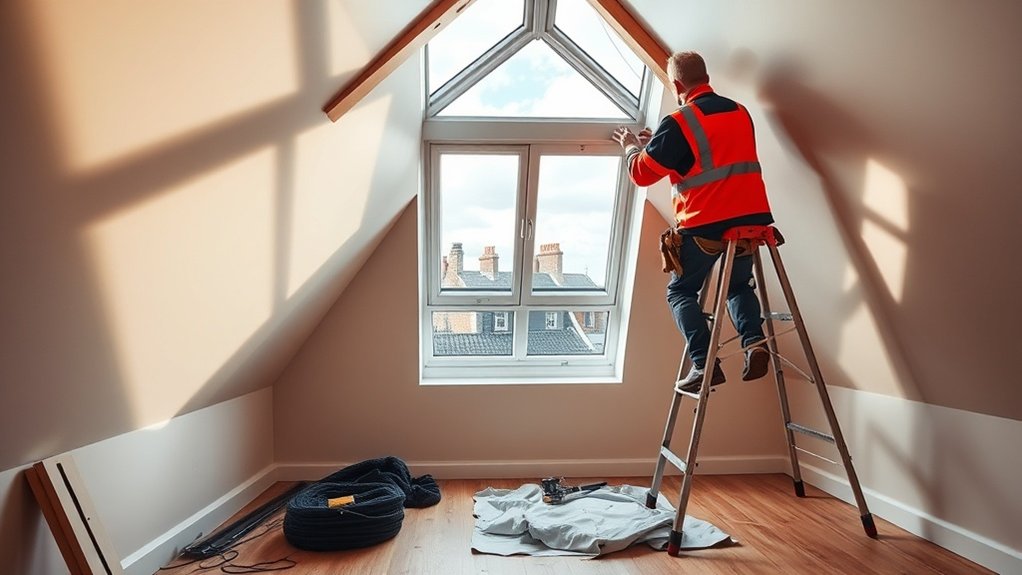
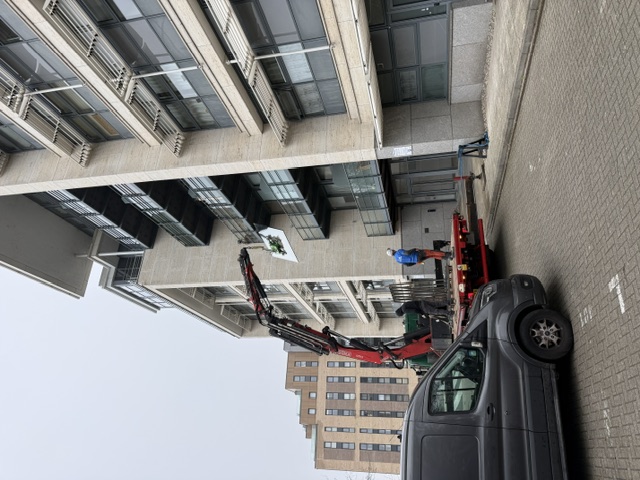
A skylight installation in Vauxhall alters a working roof, so the sequence matters: survey, structural check, opening and weathering, upstand, glazing and finally internal making-good, each arranged to keep the house exposed for as short a time as possible. Scaffold or tower access, any lifting equipment and temporary covers are organised around that programme.
A typical job runs as follows:
- Before site, one to two weeks: measured survey, structural checks and design of the upstand and drainage falls.
- Roof works, one to three days: cutting the opening, forming the insulated upstand and tying membranes into the existing roof.
- Glazing, one day: positioning the unit, sealing every junction and checking the view from the key rooms below.
- Internal finishing, one to three days: lining the shaft, vapour control, decoration and provision for future cleaning access.
Leaks, Condensation And Draughts: Common Vauxhall Skylight Problems
A properly designed rooflight should stay watertight and airtight for decades, yet across Vauxhall's mix of old and altered roofs most skylight faults start at the junctions, not in the glass. Leaks usually appear where the membrane, upstand and flashing lose continuity, and retrofitted units that bridge two different roof build-ups are the most common offenders.
Condensation points to cold bridging or poor ventilation. A cold kerb, a metal frame without a thermal break or a gap in the vapour barrier lets warm, moist air reach a cold surface, so water runs down the inner pane or collects inside the lining and stains the ceiling.
Draughts generally follow an incomplete air seal around the frame or a hinge that has dropped out of alignment. Regular checks combined with targeted roof repairs let us rebuild those junctions properly instead of running another bead of mastic over the symptom.
We also handle flat roof skylights in Vauxhall, often on the same visit.
Frequently Asked Questions
Are There Eco-Friendly or Recycled-Material Skylight Options Available in Vauxhall?
Yes. Several manufacturers we work with in Vauxhall use frames made from recycled aluminium or FSC-certified timber, paired with low-E, argon-filled glazing. Triple glazing, warm-edge spacers and thermally broken frames reduce heat loss, and opening units with automatic vents cut the need for mechanical cooling. Some ranges offer light-redirecting glass to push daylight further into a room, and upstands designed to work with green roofs. Ask us for the environmental product declarations if you are targeting a particular standard.
How Do Skylights Impact the Resale Value of Vauxhall, SW8 Properties?
Skylights usually help a sale because they turn dark halls, landings and deep kitchens into bright rooms, which is one of the first things viewers notice. Buyers read quality rooflights, neat flashings and a tidy shaft as a sign the rest of the work was done properly. A unit with good U-values and solar control also keeps energy costs down, which matters to buyers looking at EPC ratings. In competitive Vauxhall streets a loft or extension that is bright and warm tends to photograph better and attract stronger offers.
Can Skylights Be Integrated With Smart Home and Automation Systems?
Yes, most electric skylights now connect to smart home systems. Manufacturers offer RF, Zigbee or Wi-Fi modules that let you set opening angles, blind positions and ventilation schedules from an app or as part of a scene. Rain, CO2, temperature and light sensors can trigger the actuators automatically, so the roof closes before a shower and opens when the kitchen gets stuffy. Voice assistant control and links to a wider building management system are available for larger properties.
What Maintenance Schedule Is Recommended for Skylights in Vauxhall’s Polluted Air?
Plan a check every three months, with the outer glass cleaned every couple of months in the dirtiest periods, because traffic grime and tree debris build up quickly in Vauxhall. Particulates dull the glass, degrade sealants and block drainage channels. At each visit inspect the flashings, fixings and vapour seals, wash the glass with a pH-neutral cleaner, check the gaskets still compress and clear the condensation channels. Once a year it is worth having a professional survey, ideally with a thermal camera, to pick up small leaks and gaps in the insulation.
Are There Insurance Implications or Discounts for Installing Skylights in Vauxhall Homes?
Discounts are rare, but some insurers look favourably on upgrades that improve security, thermal performance or fire resistance, and each case is judged individually. Always declare a new skylight so a later claim is not disputed. Insurers like to see laminated or toughened glass, a properly built upstand, a certified flashing system and compliance with Part L and Part B. Impact-resistant glazing, controlled ventilation and tested fixings all reduce the risk of storm damage, leaks and breakage on exposed Vauxhall roofs.
Summary
Adding skylights to your Vauxhall, SW8 home changes how the rooms feel, how daylight moves through the plan and how the roof performs thermally. Units with low U-values and high light transmittance can cut daytime lighting use substantially, and careful work on structure, falls, flashings and vapour control keeps leaks, condensation and draughts away. If you are planning a loft, extension or kitchen in Vauxhall, call us for a free survey and quote. Our local glaziers in Vauxhall handle domestic and commercial work from the same base, so one call covers it all.