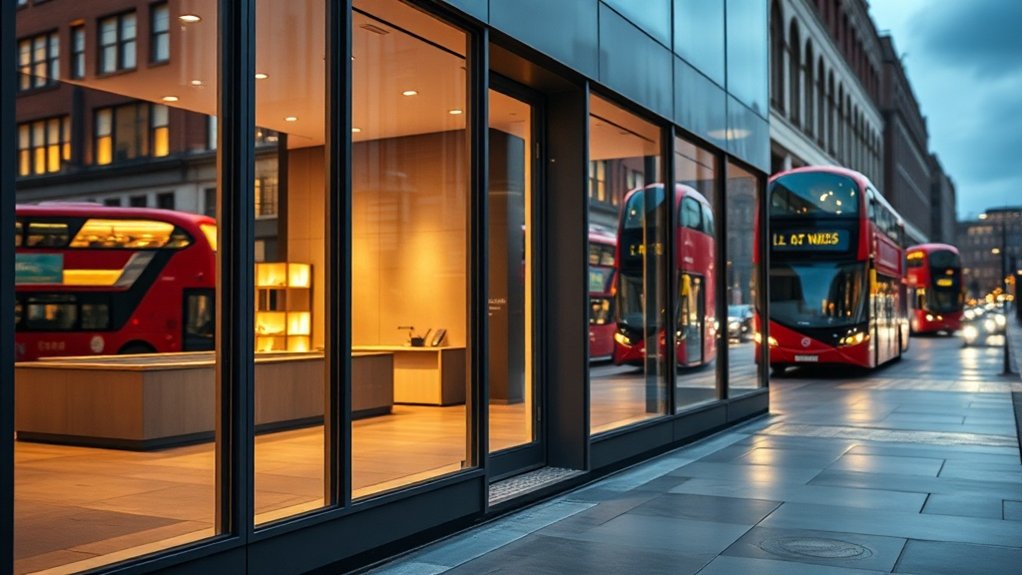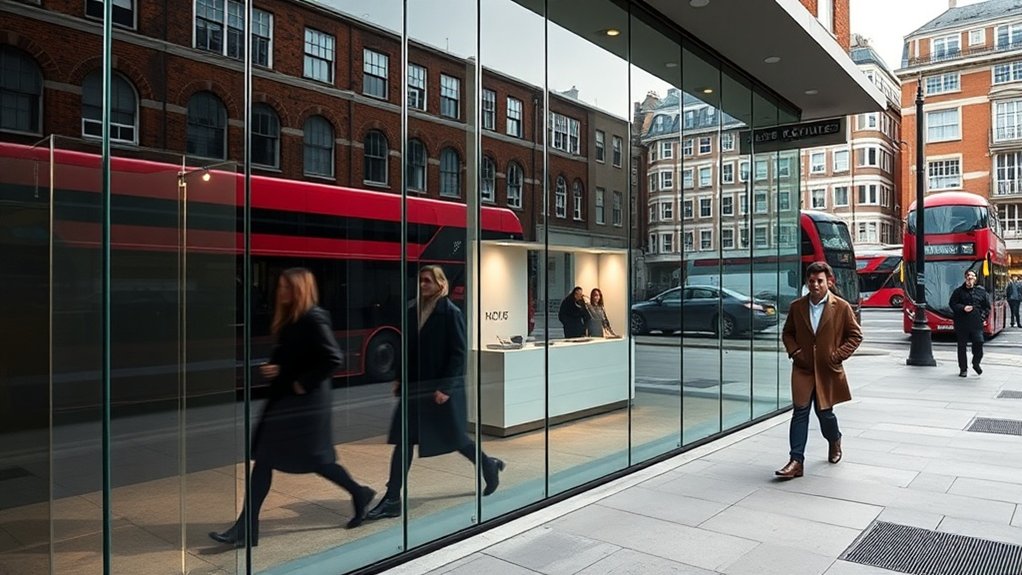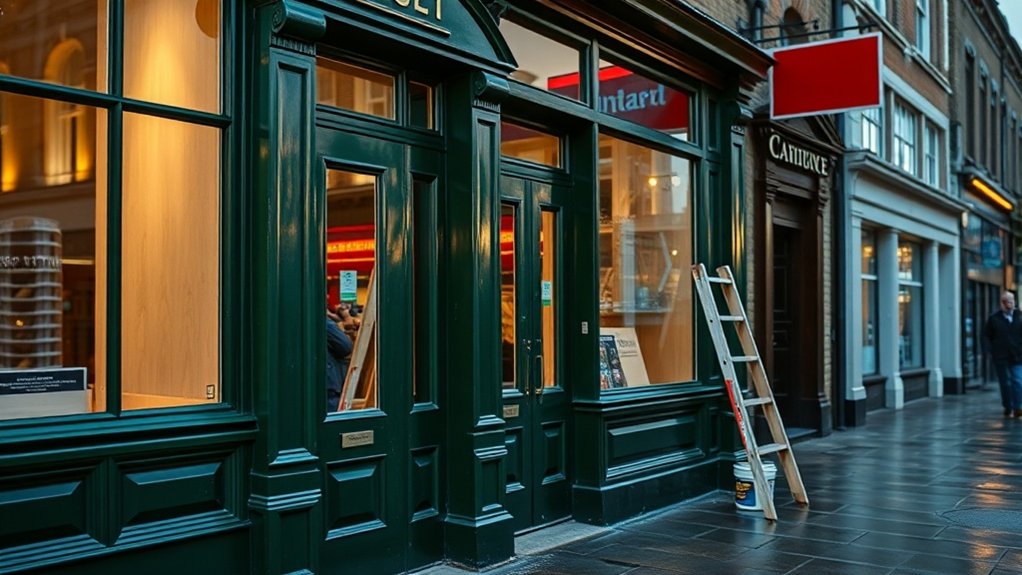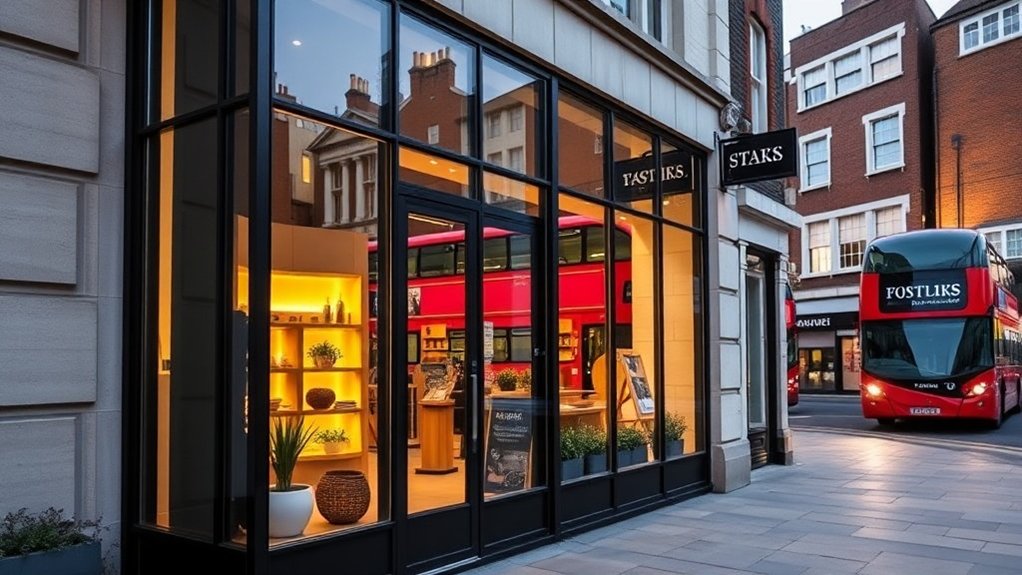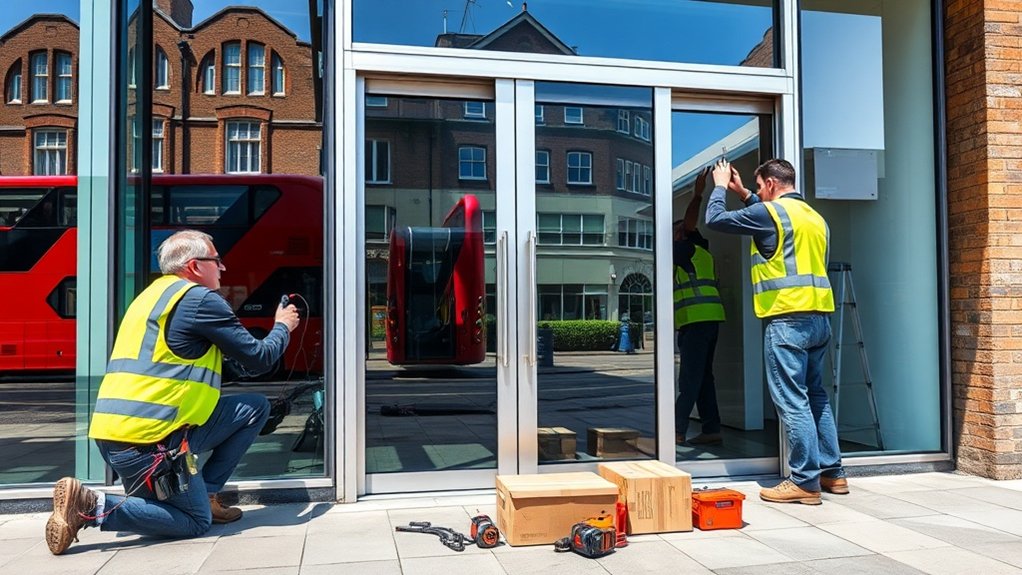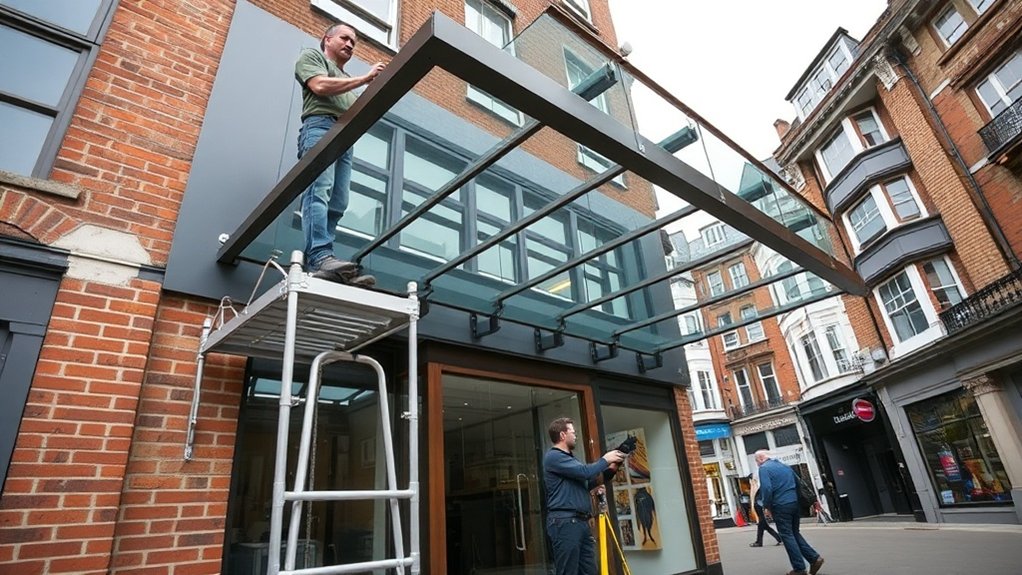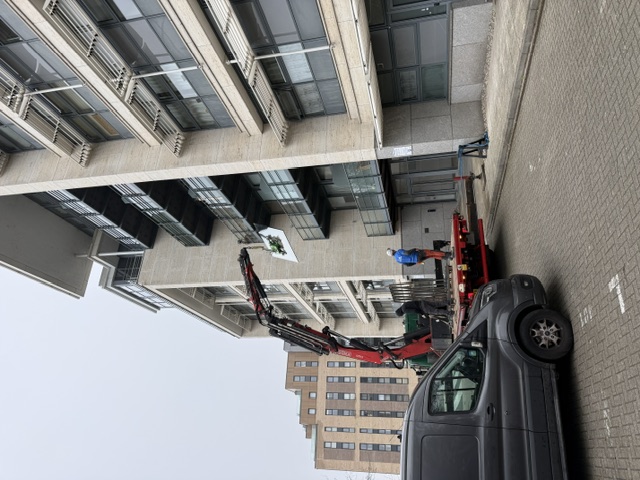
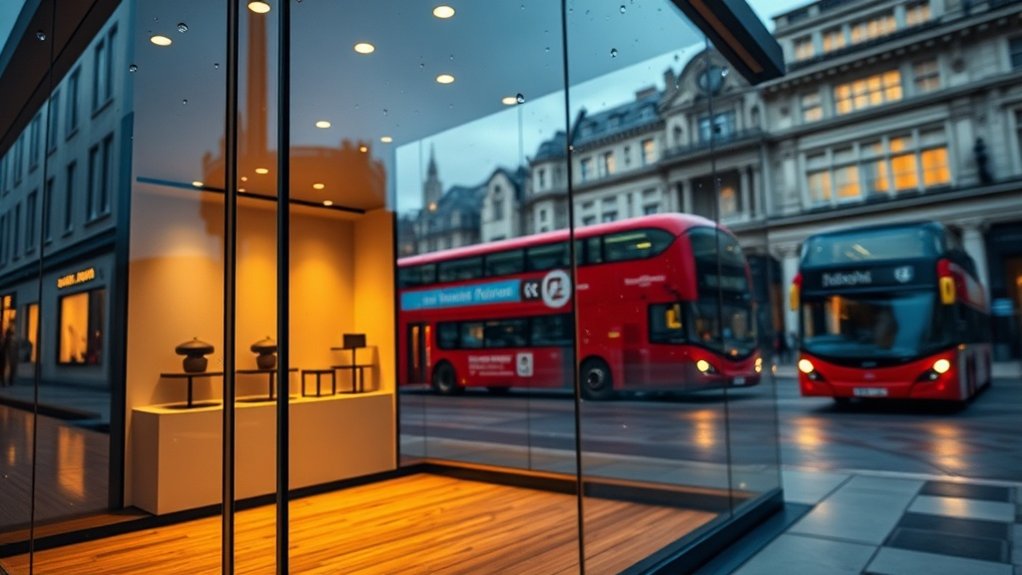
Specifying shop front glazing in Vauxhall means working within planning controls, conservation rules and the security expectations of insurers, while still giving customers a clear view of what you sell. The decisions that matter are the glass itself (toughened, laminated or an insulated unit), the system (framed or frameless), compliance with Part L and PAS 24, and the doors, hardware and access control that take the daily wear. Whole-life cost, cleaning and the heritage setting all feed in. The sections that follow set out how we approach each of those choices on a Vauxhall high street.
Key insights
- Shop fronts in Vauxhall must satisfy the Building Regulations and, in conservation areas or on listed buildings, the council's shop front and heritage policies.
- Framed systems are cheaper and easier to maintain; frameless fronts give the cleanest look but need higher-grade glass and precise fittings.
- Glass in critical locations must be safety glass to BS 6262 and BS EN 12600, with laminated glass to BS EN 356 and PAS 24 doorsets where security matters.
- Insulated units with low-E coatings and thermally broken frames meet Part L and cut heating bills; acoustic laminates tame traffic noise.
- A good glazing contractor provides structural calculations, help with approvals and a maintenance plan, not just a price per square metre.
What Makes Vauxhall Shop Front Glazing Unique
A shop front in Vauxhall, SW8 has to do more than one in a retail park. Planning officers take a close interest in the street scene, footfall is heavy, break-ins are a real risk and energy rules keep tightening. The glass is one part of a façade system that has to reconcile heritage, branding and performance in a single assembly.
On older parades the new glazing has to sit comfortably with Victorian or inter-war architecture, matching mullion positions, sightlines and frame depths to the neighbouring fronts while hiding thermal breaks, low-E coatings and acoustic interlayers inside. Busy pavements call for impact-resistant glass, anti-burglary laminates and locks that meet PAS 24. At the same time, larger panes, printed interlayers and ceramic frit give you a frontage that signposts the brand, while the whole assembly still meets Part L, noise and solar control targets.
How to Choose the Right Vauxhall Shop Front Glazing
Turning those constraints into a specification starts with treating the shop front as a complete system rather than a sheet of glass in a frame. Map the planning status, the security risk and the energy target onto measurable criteria: impact safety to BS 6262 and BS EN 12600, attack resistance to BS EN 356 with PAS 24 doorsets, a U-value and g-value that satisfy Part L and the local design guide, and a sound reduction figure if the shop faces a bus route or railway.
Then bring in the commercial side. Slim sightlines, fewer mullions and low-iron glass make the display read clearly from across the road, while a selective solar coating stops a south- or west-facing shop overheating in summer. Frameless or slimline systems with oversized panes keep the frontage flexible for future changes of display or tenant.
Key Glazing Regulations for Vauxhall Shop Fronts
A Vauxhall shop front design has to line up with the current Building Regulations, which for most projects means Approved Documents K, M, N and, where it applies, Q. Safety glass is required in critical locations, thresholds and sightlines have to work for wheelchair users and people with low vision, and the glazing system has to meet the security standards your insurer and Secured by Design expect. Treating compliance, safety, access and security as one package avoids expensive changes after installation and speeds up sign-off.
Building Regulations Compliance
Because a Vauxhall, SW8 shop front touches structural safety, accessibility and public protection at once, the glazing design has to satisfy several parts of the Building Regulations plus any local authority conditions. Parts A, B, K, L, M and N and the relevant BS EN standards all apply, and each clause has to be matched to a glass type, a fixing method and an interface detail.
Where the building or street is protected, conservation policy comes on top. That usually means supporting the application with a heritage statement, U-value calculations and sightline drawings showing how little the new work changes the elevation.
Approvals go faster when compliance is built into the design stages: sort out load paths, door thresholds, manifestation bands and thermal performance before the drawings are finalised, so the specification, the shop front drawings and the work on site all match what building control expects.
Safety Glass Requirements
Large panes beside a busy Vauxhall pavement must be safety glass. The requirement is glass meeting BS 6262 and tested to BS EN 12150 or BS EN 14449 in critical locations, which for shop fronts means everything within 1,500 mm of the floor. Toughened or laminated units are the normal answer, chosen for impact resistance, residual strength after breakage and durability.
Thickness should come from a calculation using wind load, pane size and fixing method rather than a rule of thumb. Frameless fronts need heat-soaked laminated toughened glass with structurally bonded joints. Edges should be polished rather than simply arrised to limit stress concentrations. Record the glass type, interlayer and test certificates so future refits and insurance queries are easy to answer.
Accessibility and Security
Clear sightlines sell goods, but a Vauxhall shop front has to be both easy for everyone to enter and hard for anyone to break into. Door widths, threshold heights and manifestation markings must follow Approved Document M and BS 8300 so the entrance is step-free and legible. Low-reflection glass and automatic sliding doors help customers find their way in.
For security, specify laminated glass to BS EN 356, anti-bandit framing and doorsets certified to PAS 24 or LPS 1175, linked to monitored locks and access control. Toughened laminated glass resists the opportunist while keeping the transparency modern retail depends on. Accessible hardware, continuous hinges and secure glazing rebates together give a front that welcomes customers and stands up to attack.
Framed vs Frameless Shop Front Glazing
Choosing between framed and frameless glazing sets brand appearance against structure and compliance. Mullions, patch fittings and glass specification each affect how the front looks, how loads are carried, how it behaves on impact and what it costs over its life. Budget, cleaning regime, hardware wear and expected service life all need weighing before the decision is made.
Aesthetic Impact And Branding
Before any glass thickness or mullion layout is drawn, decide which approach best suits the brand's street presence. Passers-by form a view of a shop in a few seconds, and the frame, or the absence of one, is part of that impression.
A framed front allows strong sightlines, powder coating in a brand colour and signage fixed straight to the frame. A frameless front gives a gallery-like transparency where the product, not the building, takes centre stage.
Use the glazing as part of the branding rather than a neutral enclosure:
- Line up mullions with display fixtures and signage zones inside
- Match frame colours to the brand palette and the shopfitting materials
- Add frit patterns, printed interlayers or subtle decals to carry the logo or a campaign
Structural Support And Safety
A brand-led front still has to carry wind, resist impact and protect the people inside. With a framed system the glass sits in aluminium or steel profiles, so the load paths are predictable and compliance with BS 6262 and the Eurocodes is well understood. Mullions and transoms handle wind pressure, impact and building movement.
A frameless front needs more engineering. Toughened or laminated glass, high-grade interlayers and precisely designed patch fittings, channels or spider brackets have to deliver the same performance. Fixing substrates, edge cover and deflection must be checked by calculation and sometimes by finite element analysis. Either way, the design must provide safe breakage behaviour, controlled access and clear escape routes.
Cost, Maintenance And Longevity
Framed and frameless fronts can look similar in a photograph, but their costs, maintenance and lifespan diverge once you look past the headline price. Framed systems cost less to supply but tend to need more hardware replacement over time; frameless glazing demands dearer glass and fittings yet gives a cleaner asset with fewer parts to wear.
- Cost: include hardware, door automation, specialist cleaning and any later solar or security film in the comparison.
- Maintenance: framed units need gaskets, hinges and coatings checked periodically; frameless fronts depend on accurate alignment and good-quality patch fittings.
- Longevity: well-detailed drainage, protected edges and impact-resistant laminates add years of service and cut unplanned closures.
Toughened, Laminated or Double Glazing: What to Choose
For a Vauxhall shop front the decision between toughened, laminated and double glazing follows from the risk profile, the performance targets and the regulations. Toughened glass is heat treated for strength, resisting impact and thermal stress, and breaks into small blunt pieces rather than shards.
Laminated glass bonds panes with one or more interlayers, so it stays in the frame after breakage, reduces noise and filters UV while keeping a crisp appearance. It is the choice where the front must remain closed after an attack or where a higher safety rating is needed.
Double glazing is about warmth and condensation control, improving U-values and managing solar gain. In practice toughened or laminated panes are built into insulated units so the front meets Part L and keeps running costs down.
Balancing Security and Style in Vauxhall Shop Fronts
Choosing the glass is half the task; the other half is a front that resists crime without looking like a fortress to Vauxhall, SW8 shoppers. Many high streets combine a high threat level with planning constraints on appearance, so every element has to earn its place.
Security and style are balanced by bringing together:
- Anti-ram frames, reinforced mullions and locking arranged around PAS 24 principles
- Flush thresholds, slim thermally broken profiles and a security film that is invisible from the pavement
- Weather details such as drained rebates, marine-grade hardware and high-performance sealants
A capable glazing contractor can use laminated glass, structural silicone and concealed bracing to reach the burglary delay times insurers ask for while keeping the transparent, minimal frontage that the brand and the conservation officer both want.
Energy Efficiency and Comfort With Shop Front Glazing
Double glazing turns a shop front into a proper thermal barrier, bringing U-values down and evening out the temperature across the sales floor. Insulated units with low-E coatings and argon fill cut both conductive and radiant heat loss through the glass. Staff and customers near the window stay comfortable, the heating and cooling plant works less and the energy bill falls.
Double Glazing For Insulation
A front that is mostly glass need not be the coldest part of the building. High-performance double glazing changes the picture, reducing heat loss and keeping the internal temperature steady, and it can do so behind a period façade as readily as a modern one.
The ingredients are a low-E coating, warm-edge spacer bars and argon or krypton gas fill, which together give a low centre-pane U-value without dulling the view or the branding.
- Choose a cavity depth that balances thermal resistance against slim sightlines.
- Use thermally broken framing so mullions and transoms do not become cold bridges.
- Build the glass make-up (laminated, toughened, acoustic interlayer) to serve comfort, security and brand at once.
The shop front then works as part of the thermal envelope rather than a hole in it.
Minimising Heat Loss
Good double glazing is the foundation, but the real savings come from treating the whole front as one thermal system, frame and junctions included.
Low-E coatings, warm-edge spacers and gas-filled cavities bring the glass U-value down without clouding the display. Thermally broken aluminium or steel framing stops heat escaping along the mullions and transoms.
In Vauxhall's conservation areas, slimline double glazing, vacuum glazing or secondary glazing behind the original frames reconciles heritage policy with efficiency. Airtight gaskets, pressure-equalised joints and insulated bulkheads behind roller shutters and fascia signs stop warm air leaking out at the edges and keep the interior stable.
Acoustic Glazing for Noisy Vauxhall High Streets
Shops on the busiest Vauxhall roads deal with traffic, bus brakes and late-night crowds, and the answer is to stop the noise at the glass. Acoustic shop front glazing is designed to break up and damp the vibration paths through the façade.
Laminated assemblies with panes of different thicknesses, acoustic PVB interlayers and deeper frames interrupt sound transmission. Detailed properly, they deliver a worthwhile reduction in decibels at the traffic frequencies that matter, while keeping slim sightlines and an accessible entrance.
- Pick Rw-rated acoustic laminates tuned to low-frequency road noise
- Treat airtight gaskets, insulated thresholds and perimeter seals as the first line of soundproofing
- Combine structural silicone, thermally broken frames and isolated mullions to limit flanking noise
Branding, Visibility and Lighting Through Shop Front Glass
Seen as an illuminated brand canvas rather than a hole in the wall, the shop front turns glass specification, coatings and lighting into commercial tools. Light transmission, colour rendering and reflection control all decide whether the display and the brand colours read true from across the street.
Low-iron glass gives clean whites and high clarity, and a selective coating controls glare while keeping the display bright. Fritted bands, interlayers or discreet logos within the glass build-up carry the branding without losing transparency. Edge-lit glass, integrated LEDs and concealed track let the display change without rewiring.
Calibrated lux levels, even light distribution and contrast control keep the window legible through Vauxhall's changeable daylight and after dark, which lengthens dwell time at the window and encourages people in.
Glazing for Vauxhall, SW8 Heritage and Conservation Areas
Shop fronts in Vauxhall's conservation areas follow a different set of rules because planners expect historic character to be kept while thermal, security and acoustic performance improve. The work is often about re-creating original sightlines, mullion depths and glazing bar profiles, reproducing Art Deco or Victorian proportions with modern insulated units.
Typical conservation-grade details include:
- Slimline double glazing whose reflections resemble single glass
- Low-iron glass with a low-E coating chosen to avoid a mirrored look
- Putty-fronted or astragal systems that conceal the spacer bar
Doors, Access and Hardware for Vauxhall Shop Fronts
The doorset takes most of the daily knocks and most of the security risk, so doors, access control and ironmongery on a Vauxhall shop front deserve the same care as the glass. Hinges, pivots, closers and locks are part of one façade system and should be specified together.
Choose high-cycle, corrosion-resistant hardware rated for intensive use and the grimy air of a busy street. Concealed overhead closers, anti-finger-trap stiles and thermally broken thresholds keep the entrance performing and inclusive.
For a tidy elevation, align the sightlines of frame, door rails and patch fittings, and keep ironmongery minimal or use structural glass doors where appropriate. Plan access control, meaning maglocks, readers and electric strikes, into the frame design from the start so cable routes, power supply and fail-safe operation are resolved before fabrication.
Vauxhall, SW8 Shop Front Glazing: Costs and Budgeting
A realistic budget for shop front glazing in Vauxhall comes from defining specification tiers rather than chasing the lowest quote. The variables are glass type (toughened, laminated, low-iron), U-value, acoustic rating and security class, plus installation complexity and site access.
Benchmark the cost per square metre, then compare scenarios that trade capital cost against whole-life value and retail impact. The questions to ask are:
- Performance drivers: thermal efficiency, solar control, safety and security ratings
- Brand and customer goals: transparency, sightlines and the effect on visual merchandising
- Regulatory and location factors: Part L, Part Q, conservation status and local authority conditions
Framed this way, the spend on glazing links directly to outcomes the business can measure.
Planning, Maintaining and Upgrading Your Shop Front Glazing
With the budget and specification set, your Vauxhall shop front needs a lifecycle plan to stay compliant, efficient and on-brand. Start an asset register listing glass types, interlayers, coatings, framing, fixings, installation dates and warranties, so maintenance can be scheduled rather than reactive.
Agree cleaning methods that will not damage hydrophobic or low-E coatings, and inspect every quarter for failed seals, frame distortion and impact damage. In conservation areas, time upgrades to suit heritage requirements while bringing in high-performance units and discreet security laminates.
A rebrand or a lighting refresh is the natural moment to introduce smarter glass, better thermal performance and decorative detailing that strengthens the shop's identity on the street.
Frequently Asked Questions
How Quickly Can Damaged Vauxhall Shop Front Glazing Be Repaired in an Emergency?
A damaged front can usually be made safe within an hour or two of the call, and full replacement is often possible the same day if the glass specification and hardware are standard. The emergency crew cordons off the area, removes loose glass, fits temporary security boarding and measures the opening for new toughened or laminated units. Those units are then fitted into the existing mullions and transoms, the load paths are checked and the glass is confirmed as meeting safety glass standards before the boarding comes down. Bespoke laminates or heritage profiles may take a few days longer.
Can Shop Front Glazing Be Integrated With Smart Locks and Remote Monitoring Systems?
Yes. The glazing system can be designed around compatible access hardware such as maglocks, electric strikes or smart cylinders, which connect through PoE controllers to the shop's network. Low-voltage cabling runs inside the frames, contact and vibration sensors sit within the glazing system, and CCTV and analytics link to the same platform. The result is an IP-based perimeter where opening times, alerts and audit trails are managed from one dashboard in real time, whether you are in the shop or at home.
What Insurance Requirements Affect Glazing Choices for Vauxhall Retail Premises?
Insurers treat the glass as the first physical line of defence. Many policies require laminated safety glass with a stated impact rating and compliance with BS EN 356 and BS 6262 to limit claims. Some also set conditions on anti-bandit specification, fire resistance and shutters or grilles for certain trades such as jewellers and phone shops. Read the small print, fit certified systems and get the insurer's written confirmation that the specification is acceptable before the glass is ordered; it avoids disputes after a break-in.
How Does Shop Front Glazing Impact Business Rates or Property Valuations in Vauxhall, SW8?
The effect on business rates is indirect, but glazing still influences value. A high-specification, thermally efficient front improves the perceived quality of the frontage, which supports rental value, tenant demand and therefore the rateable value and capital valuation. Poor glazing has the opposite effect by weakening yield assumptions and attracting repair deductions. Aligning the specification with RICS Red Book valuation factors, meaning energy performance, Secured by Design and placemaking, gives a valuer something to capitalise.
Are There Sustainable or Recycled Glass Options for Environmentally Conscious Vauxhall Retailers?
Yes. Float glass already contains recycled cullet, and low-iron, high-performance glazing can be sourced from suppliers who maximise that content and publish the figures. Combine it with warm-edge spacers and argon-filled units for lower operational carbon, and specify thermally broken aluminium frames with high post-consumer recycled content. Ask for Environmental Product Declarations, Cradle to Cradle certification and lifecycle carbon data so embodied CO2 can be compared across tenders.
Summary
Treated as both shield and shop window, shop front glazing in Vauxhall becomes a hard-working asset rather than a cost. The right system, compliance with Part K and Part M, secure access control and a planned maintenance routine protect performance, security and appearance for years. If you would like a free survey and a written quote for a new or upgraded shop front, call us. As Vauxhall glaziers with a local team, we can usually survey within a few days of your call.